
购物车0
产品总数:56397

| 中文名称 |
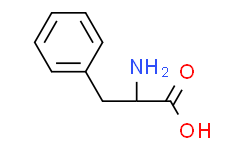
L-Phenylalanine
|
|---|---|
| 中文别名 |
L-苯丙氨酸;L-2-氨基-3-苯基丙酸;L-2-氨基苯丙酸;L-Α-氨基-Β-苯丙酸;(S)-2-氨基-3-苯基丙酸;L-苯丙氨酸(25KG起定);L-苯基丙胺酸 L-2-氨基苯丙酸;L-Phenylalanine; L-苯丙氨酸;L苯丙氨酸;L-苯丙氨酸 USP标准品;L-苯丙氨酸 标准品;L-苯丙氨酸(氨基酸);L-苯丙氨酸(工业级);L-苯丙氨酸,BR;L-苯丙氨酸及合成技术;L-苯基丙氨酸;L-苯基丙氨酸(RG);苯丙氨酸;苯丙氨酸标准品;苯基丙氨酸 EP标准品;食品级L-苯丙氨酸;(S)-2-氨基-3-苯丙酸;L-α-氨基-β-苯基丙酸;L-α-氨基氢化肉桂酸;苯氨基丙酸;苯丙氨酸,不存在动物源成分;苯丙氨酸杂质 标准品;L-苯丙氨酸医药级,纯度:>99%
|
| 英文名称 |
L-Phenylalanine
|
| 英文别名 |
L-Phenylalanine;L(-)-PHENYLALANINE;L-PHE;BETA-PHENYLALANINE;DL-2-AMINO-3-PHENYLPROPANOIC ACID;L-ALPHA-AMINO-BETA-PHENYLPROPIONIC ACID;L-BETA-PHENYLALANINE;L-2-AMINO-3-PHENYLPROPANOIC ACID;(S)-2-Amino-3-phenylpropanoic acid;(S)-2-Amino-3-phenylpropionic acid;H-Phe-OH;PHENYLALANINE, L-(P);PHENYLALANINE, L-(RG);(S)-(-)-Phenylalanine;3-Phenylpropionyl-phenyl-thioether;3-Phenylthiopropionic acid,S-phenyl ester;Benzenepropanethioic acid,S-phenyl ester;L-Phenylalanine(H-Phe-OH );L-β-Phenylalanine;PHE;phenyl 4-phenylthiobutanoate;S-Phenyl-3-phenylpropanthioat;Thiohydrozimtsaeurephenylester;3-Phenyl-L-alanine;L-2-Amino-3-phenylpropionic acid;phenylalanine;(S)-Phenylalanine;beta-Phenyl-L-alanine;(L)-Phenylalanine;3-Phenylalanine;(2S)-2-amino-3-phenylpropanoic acid;Antibiotic FN 1636;L-Alanine, phenyl-;Alanine, 3-phenyl-;L-Alanine, 3-phenyl-;(S)-alpha-Amino-beta-phenylpropionic acid;Phenylalanine (VAN);Phenylalaninum [Latin];Fenilalanina [Spanish];(S)-alpha-Aminohydrocinnamic acid;Alanine, phen
|
| Cas No. |
63-91-2
|
| 分子式 |
C9H11NO2
|
| 分子量 |
165.19
|
| 包装储存 |
Powder; -20°C; 3 years; 4°C; 2 years;
|
| 详情描述 |
L-Phenylalanine ((S)-2-Amino-3-phenylpropionic acid) 是分离自大肠杆菌的必需氨基酸。L-Phenylalanine 是一种电压依赖性 α2δ 亚基 Ca2+ 通道拮抗剂,Ki 为 980 nM。L-Phenylalanine 是 NMDARs (KB 573 μM) 和非 NMDARs 的甘氨酸和谷氨酸结合位点的竞争性拮抗剂。L-Phenylalanine 广泛用于食品香料和药品的生产中。L-Phenylalanine ((S)-2-Amino-3-phenylpropionic acid) 是分离自大肠杆菌的必需氨基酸。L-Phenylalanine 是一种电压依赖性 α2δ 亚基 Ca2+ 通道拮抗剂,Ki 为 980 nM。L-Phenylalanine 是 NMDARs (KB 573 μM) 和非 NMDARs 的甘氨酸和谷氨酸结合位点的竞争性拮抗剂。L-Phenylalanine 广泛用于食品香料和药品的生产中。
|
| 生物活性 |
L-Phenylalanine ((S)-2-Amino-3-phenylpropionic acid) is an essential amino acid isolated from Escherichia coli. L-Phenylalanine is a α2δ subunit of voltage-dependent Ca channels antagonist with a Ki of 980 nM. L-phenylalanine is a competitive antagonist for the glycine- and glutamate-binding sites of N-methyl-D-aspartate receptors (NMDARs) (KB of 573 μM ) and non-NMDARs, respectively. L-Phenylalanine is widely used in the production of food flavors and pharmaceuticals.
|
|---|---|
| 性状 |
Solid
|
| IC50 & Target[1][2] |
NMDA Receptor Microbial Metabolite
|
| 体外研究(In Vitro) |
DAHP synthetase (DS) and chorismate mutase/prephenate dehydratase (CM/PD) are key enzymes in the L-Phenylalanine biosynthesis pathway. DS is sensitive to feedback inhibition by tyrosine, and CM/PD is subject to feedback inhibition by L-Phenylalanine.L-Phenylalanine attenuates non-NMDA receptor function in cultured neurons with an IC50 of 980 μM.Medlife has not independently confirmed the accuracy of these methods. They are for reference only.
|
| 体内研究(In Vivo) |
The effects of L-Phenylalanine on NMDA-activated currents (INMDA) are studied in cultured hippocampal neurons from newborn rats using the patch-clamp technique. L-Phenylalanine specifically and reversibly attenuates INMDA in a concentration-dependent manner (IC50 of 1.71 mM). L-Phenylalanine inhibits specifically NMDAR current in hippocampal neurons by competing for the glycine-binding site.Medlife has not independently confirmed the accuracy of these methods. They are for reference only.
|
| 运输条件 |
Room temperature or refrigerated transport.
|
| 储存方式 |
Powder; -20°C; 3 years; 4°C; 2 years;
|
| ClinicalTrial |
|
| 结构分类 |
Amino acids
|
| 来源 |
Escherichia coli
|
| 溶解度数据 |
体外研究:H2O : 6.67 mg/mL(40.38 mM;Need ultrasonic)配制储存液
|
|---|
1:一般建议:溶解度为Medlife测试数据,可能与文献描述存在差异。这是由于生产工艺和批次不同产生的正常现象。为了使其更好的溶解,请用37℃加热试管并在超声波水浴中震动片刻。不同批次产品溶解度各有差异,仅做参考,具体以实验方案为准。
2:储存条件:粉末-20°C一般情况可以保存3年,溶于溶剂-80°C一般情况可以保存1年。不同产品及不同批次产品可能存在差异,请细致阅读产品信息,并辅助参考相关文献描述。
Copyright © 2025 陌孚医药 All rights reserved 未经授权禁止拷贝本站所有资料,如有违反,将追究法律责任。
 沪ICP备2023012080号 |
  沪公网安备31011402010657号
 扫码关注公众号

 产品使用指南
