
购物车0
产品总数:56377
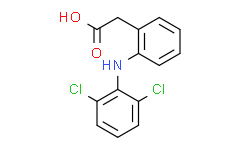


| 中文名称 |
Diclofenac.
|
||||||||||||
|---|---|---|---|---|---|---|---|---|---|---|---|---|---|
| 中文别名 |
双氯芬酸;奥尔芬,2-[(2,6-二氯苯基)氨基]-苯乙酸;2-(2,6-二氯苯氨基)苯乙酸;2-(2,6-Dichloroanilino)phenylacetic Acid 2-(2,6-二氯苯氨基)苯乙酸;醋氯芬酸杂质 A;双氯芬酸 标准品;双氯芬酸钠;双氯芬酸钠杂质;双氯芬酸杂质;双氯芬酸杂质及标准品;2-[(2,6-二氯苯基)氨基]-苯乙酸;醋氯芬酸杂质A(EP);双氯芬酸(双氯芬酸钠杂质) 标准品;双氯芬酸 ;奥尔芬;双氯芬酸钠杂质D;双氯芬酸溶液,100PPM;双氯芬酸,医药级,纯度:>99%;双氯芬酸 10G
|
||||||||||||
| 英文名称 |
Diclofenac
|
||||||||||||
| 英文别名 |
2-(2-((2,6-Dichlorophenyl)amino)phenyl)acetic acid;1-(2,6-DICHLOROPHENYL)-1,3-DIHYDRO-INDOLE-2-ONE;(N-1-(2,6-DICHLOROPHENYL) -2-INDOLIN-2-ONE;Diciofenac;2-[[2,6-Dichlorophenyl] amino] benzeneacetic acid;(o-(2,6-dichloroanilino)phenyl)-acetic acid;dichlofenac;[2-(2,6-Dichloroanilino)phenyl]-acetic acid;2-[2-(2,6-Dichlorophenyl)aminophenyl]ethanoic acid;DICLOFENAC FREE ACID;Rhumalgan;2-(2-(2,6-dichlorophenylamino)phenyl)acetic acid;Diclofenac;2-(2,6-Dichloroanilino)phenylacetic Acid;4-Hydrazino-1H-pyrimidin-2-one;DICLOFENAC ACID;[2-(2,6-DICHLORO-PHENYLAMINO)-PHENY]-ACETIC ACID;1-(2,6-DICHLOROPHENYL)-2-INDOLINONE;INDOLINONE;MEQUITAZINE;Diclac;Pennsaid;Voltaflan;DicloMelan;DicloreuMa;Transfenac;Voltaren;Diclofenacum;Diclofenaco;Diclophenac;Voltarol;ProSorb-D;Novapirina;Diclofenac resinate;Cataflam;2-((2,6-Dichlorophenyl)amino)benzeneacetic acid;Diclofenacum [INN-Latin];Diclofenaco [INN-Spanish];Benzeneacetic acid, 2-[(2,6-dichlorophenyl)amino]-;Solaraze;Voltaren-XR;2-{2-[(2,6-dichlorophenyl)amino]phenyl}acetic;1-(2,6-DICHLOROPHENYL)-2-INDOLINONE /MEQUITAZINE;1-(2,6-DICHLOROPHENYL)-2-INDOLINONE/INDOLINONE;DICLOFENAC ACID/[2-(2,6-DICHLORO-PHENYLAMINO)-PHENY]-ACETIC ACID
|
||||||||||||
| Cas No. |
15307-86-5
|
||||||||||||
| 分子式 |
C14H11Cl2NO2
|
||||||||||||
| 分子量 |
296.15
|
||||||||||||
| 包装储存 |
|
||||||||||||
| 详情描述 |
非选择性COX抑制剂,Diclofenac 是一种有效的,非选择性的抗炎剂,为 COX 的抑制剂,在 CHO 细胞中,对人 COX-1 和 COX-2 的 IC50 值分别为 4 nM,1.3 nM;Diclofenac 同时对绵羊 COX-1 和 COX-2 的 IC50 值分别为 5.1 μM,0.84 μM。 |
| 生物活性 |
Diclofenac is a potent and nonselective anti-inflammatory agent, acts as a COX inhibitor, with IC50s of 4 and 1.3 nM for human COX-1 and COX-2 in CHO cells, and 5.1 and 0.84 μM for ovine COX-1 and COX-2, respectively. Diclofenac induces apoptosis of neural stem cells (NSCs) via the activation of the caspase cascade. |
||||||||||||||||
|---|---|---|---|---|---|---|---|---|---|---|---|---|---|---|---|---|---|
| 性状 |
Solid |
||||||||||||||||
| IC50 & Target[1][2] |
|
||||||||||||||||
| 体外研究(In Vitro) |
Diclofenac effectively blocks COX-1 mediated prostanoid production from U937 cell microsomes, with an IC50 of 7±3 nM. Medlife has not independently confirmed the accuracy of these methods. They are for reference only. Cell Viability Assay
Western Blot Analysis
|
||||||||||||||||
| 体内研究(In Vivo) |
Diclofenac (3 mg/kg, b.i.d., for 5 days) significantly increases faecal Cr excretion in rats, and such effect is also observed in squirrel monkeys after administrated of 1 mg/kg twice daily for 4 days. Medlife has not independently confirmed the accuracy of these methods. They are for reference only.
|
||||||||||||||||
| 运输条件 |
Room temperature or refrigerated transportation. |
||||||||||||||||
| 储存方式 |
|
||||||||||||||||
| ClinicalTrial |
|
||||||||||||||||
| 参考文献 |
|
| 溶解度数据 |
体外研究:
DMSO : 125 mg/mL (422.08 mM; Need ultrasonic) 配制储备溶液
*
产品不同,其溶解度不同。建议根据产品选择合适的溶剂配制储备溶液;配成溶液后,建议分装保存,避免反复冻融造成的产品失效。 体内研究:
建议根据您的实验动物和给药方式选择适当的溶解方案。以下溶解方案都建议先按照 体外研究 方式配制澄清的储备液,再依次添加助溶剂:
——为保证实验结果的可靠性,澄清的储备液可以根据储存条件,适当保存;体内实验的工作液,建议您现用现配,当天使用;
以下溶剂前显示的百
*
|
|---|
[1]. Riendeau D, et al. Biochemical and pharmacological profile of a tetrasubstituted furanone as a highly selective COX-2 inhibitor. Br J Pharmacol. 1997 May;121(1):105-17. [Information]
[2]. Labib MB, et al. Design, synthesis of novel isoindoline hybrids as COX-2 inhibitors: Anti-inflammatory, analgesic activities and docking study. Bioorg Chem. 2018 Oct;80:70-80. [Information]
[3]. Chiho Kudo, et al. Diclofenac Inhibits Proliferation and Differentiation of Neural Stem Cells. Biochem Pharmacol. 2003 Jul 15;66(2):289-95. [Information]
1:一般建议:溶解度为Medlife测试数据,可能与文献描述存在差异。这是由于生产工艺和批次不同产生的正常现象。为了使其更好的溶解,请用37℃加热试管并在超声波水浴中震动片刻。不同批次产品溶解度各有差异,仅做参考,具体以实验方案为准。
2:储存条件:粉末-20°C一般情况可以保存3年,溶于溶剂-80°C一般情况可以保存1年。不同产品及不同批次产品可能存在差异,请细致阅读产品信息,并辅助参考相关文献描述。
Copyright © 2025 陌孚医药 All rights reserved 未经授权禁止拷贝本站所有资料,如有违反,将追究法律责任。
 沪ICP备2023012080号 |
  沪公网安备31011402010657号
 扫码关注公众号
 产品使用指南
