
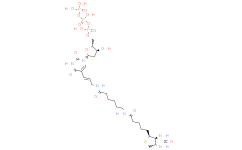
We developed a rapid and sensitive colorimetric biosensor based on competitive recognition between kanamycin (KAN), magnetic beads-kanamycin (MBs-KAN) and aptamer and terminal deoxynucleotidyl transferase (TdT)-mediated signal amplification strategy. In the absence of KAN, aptamers recognize MBs-KAN. TdT can amplify oligonucleotides to the 3'-OH ends of aptamers, with biotin-dUTP being embedded in the long single stranded DNA (ssDNA). Then the assay produced visual readout due to the horseradish peroxidase (HRP)-catalyzed color change of the substrate after the linkage between biotin and streptavidin (SA)-HRP. In the presence of KAN, however, aptamers tend to bind free KAN rather than MBs-KAN. In this case, aptamers are isolated by magnetic separation, resulting in the failure of signal amplification and catalytic signals. This competitive colorimetric sensor showed excellent selectivity toward KAN with the limit of detection (LOD) as low as 9 pM. And recovery values were between 93.8 and 107.8% when spiked KAN in milk and honey samples.
A competitive colorimetric aptasensor for simple and sensitive detection of kanamycin based on terminal deoxynucleotidyl transferase-mediated signal amplification strategy.
发布日期:2026/10/29 9:49:00


 沪公网安备31011402010657号