
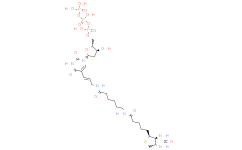
Loop mediated isothermal amplification (LAMP) is one of the best known and most popular isothermal amplification methods. It's simplicity and speed make the method particularly suitable for point-of-care diagnostics. Nevertheless, false positive results remain a major drawback. Many (downstream) applications are known for the detection of LAMP amplicons like colorimetric assays, in-situ LAMP or CRISPR-Cas systems. Often, modifications of the LAMP products are necessary for different detection applications such as lateral flow assays. This is usually achieved with pre-modified primer. The aim of this study is to evaluate amplicon labelling with different modified nucleotides such as Cy5-dUTP, biotin-dUTP and aminoallyl-dUTP as an alternative to pre-labelled primers. To realise this, the effects on amplification and labelling efficiency were studied as a function of molecule size and nucleotide amount as well as target concentration. This research shows that diverse labelling of LAMP amplicons can be achieved using different, modified nucleotides during LAMP and that these samples can be analysed by a wide range of downstream applications such as fluorescence spectroscopy, gel electrophoresis, microarrays and lateral flow systems. Furthermore, microarray-based detection and the ability to identify and distinguish false positives were demonstrated as proof of concept.
Investigation and validation of labelling loop mediated isothermal amplification (LAMP) products with different nucleotide modifications for various downstream analysis.
发布日期:2026/10/29 9:40:30


 沪公网安备31011402010657号