
购物车0
产品总数:56421
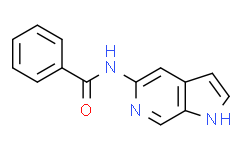

| 中文名称 |
OAC-1.
|
||||||||||||
|---|---|---|---|---|---|---|---|---|---|---|---|---|---|
| 中文别名 |
N-1H-吡咯并[2,3-C]吡啶-5-基苯甲酰胺;N-(1H-吡咯并[2,3-c]吡啶-5-基)苯甲酰胺
|
||||||||||||
| 英文名称 |
N-1H-Pyrrolo[2,3-c]pyridin-5-ylbenzamide
|
||||||||||||
| 英文别名 |
OAC-1;OAC1;BenzaMide, N-1H-pyrrolo[2,3-c]pyridin-5-yl-;N-1H-Pyrrolo[2,3-c]pyridin-5-ylbenzamide;N-1H-Pyrrolo[2,3-c]pyridin-5-yl-benzamide;N-(1H-Pyrrolo[2,3-c]pyridin-5-yl)benzamide;BAS 00287861;C14H11N3O;N-{1H-pyrrolo[2,3-c]pyridin-5-yl}benzamide;Cambridge id 5236727;TimTec1_006628;Oct4-activating Compound 1;Oprea1_365767;Oprea1_004689;OAC 1; OAC-1;AOB4083;HMS1552N06;HMS3653I19;BCP21023;2571AH;s7217;NCGC0034795
|
||||||||||||
| Cas No. |
300586-90-7
|
||||||||||||
| 分子式 |
C14H11N3O
|
||||||||||||
| 分子量 |
237.26
|
||||||||||||
| 包装储存 |
|
||||||||||||
| 详情描述 |
300586-90-7,OAC1,Medlife,上海现货。 Medlife,致力于提供高品质、高性价比小分子化合物的产品。 Medlife小分子化合物大量库存,提供超过2万种的抑制剂、激动剂、拮抗剂等产品,是药物及疾病研究的重要原料供应商。 Oct4激活剂,OAC1是转录因子Oct4活化剂,提高iPSC的重编程效率和编程过程中的加速。 查询关键词:“300586-90-7,OAC1,PC14946,Medlife,上海现货”。 |
| 生物活性 |
OAC1 is a potent Oct4 activator. OAC1 activates Oct4 and Nanog promoters and enhances induced pluripotent stem cells (iPSC) formation. OAC1 activates OCT4 through upregulation of HOXB4 expression. OAC1 increases transcription of the Oct4-Nanog-Sox2 triad and TET1. OAC1 facilitates the reprogramming of cells by enhancing efficiency and shortening the reprogramming time. |
||||||||||||
|---|---|---|---|---|---|---|---|---|---|---|---|---|---|
| 性状 |
Solid |
||||||||||||
| IC50 & Target[1][2] |
|
||||||||||||
| 体外研究(In Vitro) |
OAC1 (10 μM; 7 d) enhances reprogramming efficiency. OAC1 increases induced pluripotent stem cells (iPSC) generation from mouse embryonic fibroblasts (MEFs) and accelerates the appearance of iPSC-like colonies. Medlife has not independently confirmed the accuracy of these methods. They are for reference only. Cell Proliferation Assay
|
||||||||||||
| 体内研究(In Vivo) |
OAC1 (50000 CB CD34 cells with OAC1(500 nM); i.h.; 16 weeks) enhances short and long-term engrafting hematopoietic stem cells (HSC) in irradiated NSG mice. Medlife has not independently confirmed the accuracy of these methods. They are for reference only.
|
||||||||||||
| 运输条件 |
Room temperature or refrigerated transportation. |
||||||||||||
| 储存方式 |
|
||||||||||||
| 参考文献 |
|
| 溶解度数据 |
体外研究:
DMSO : ≥ 40 mg/mL (168.59 mM) * "≥" means soluble, but saturation unknown. 配制储备溶液
*
产品不同,其溶解度不同。建议根据产品选择合适的溶剂配制储备溶液;配成溶液后,建议分装保存,避免反复冻融造成的产品失效。 体内研究:
建议根据您的实验动物和给药方式选择适当的溶解方案。以下溶解方案都建议先按照 体外研究 方式配制澄清的储备液,再依次添加助溶剂:
——为保证实验结果的可靠性,澄清的储备液可以根据储存条件,适当保存;体内实验的工作液,建议您现用现配,当天使用;
以下溶剂前显示的百
*
|
|---|
[1]. Li W, et, al. Identification of Oct4-activating compounds that enhance reprogramming efficiency. Proc Natl Acad Sci U S A. 2012 Dec 18;109(51):20853-8. [Information]
[2]. Huang X, et, al. Activation of OCT4 enhances ex vivo expansion of human cord blood hematopoietic stem and progenitor cells by regulating HOXB4 expression. Leukemia. 2016 Jan;30(1):144-53. [Information]
1:一般建议:溶解度为Medlife测试数据,可能与文献描述存在差异。这是由于生产工艺和批次不同产生的正常现象。为了使其更好的溶解,请用37℃加热试管并在超声波水浴中震动片刻。不同批次产品溶解度各有差异,仅做参考,具体以实验方案为准。
2:储存条件:粉末-20°C一般情况可以保存3年,溶于溶剂-80°C一般情况可以保存1年。不同产品及不同批次产品可能存在差异,请细致阅读产品信息,并辅助参考相关文献描述。
Copyright © 2025 陌孚医药 All rights reserved 未经授权禁止拷贝本站所有资料,如有违反,将追究法律责任。
 沪ICP备2023012080号 |
  沪公网安备31011402010657号
 扫码关注公众号

 产品使用指南
