
购物车0
产品总数:56379
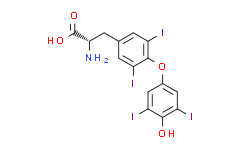


| 中文名称 |
L-Thyroxine.
|
|---|---|
| 中文别名 |
L-甲状腺素;甲四碘胺;2-甲状腺素;O-(4-羟基-3,5-二碘苯基)-3,5-二碘-L-酪氨酸;D-ALPHA-生育酚;左旋甲状腺素;L-Β-(3,5-二磺-4-羟基苯氧基)-3,5-二磺苯丙氨酸;左甲状腺素;甲狀腺素;D-α生育酚;D-α-生育酚;L-甲状腺素 标准品;L-甲状腺素粉;甲状腺素;甲状腺素13C6;左甲状腺素 USP标准品;左旋甲状腺素(甲状腺素);2-甲状腺素 O-(4-羟基-3,5-二碘苯基)-3,5-二碘-L-酪氨酸 D-Alpha-生育酚 左旋甲状腺素 3,5,3',5'-四碘甲状腺胺酸;3,3',5,5''-四碘代-L-甲状腺原氨酸;3,5,3',5'-四碘甲状腺胺酸;3-[4-(4-羟基-3,5-二碘苯氧基)-3,5-二碘苯基]-L-丙氨酸;L-甲状腺激素;甲四碘安,LEVOTHYROXINE;甲状腺素左旋甲状腺素;左甲
|
| 英文名称 |
L-Thyroxine
|
| 英文别名 |
L-Thyroxine;levothyroxine;L-Thyroxine sodium salt pentahydrate;3-[4-(4-Hydroxy-3,5-diiodophenoxy)-3,5-diiodophenyl]-alanine;3,5,3’,5’-tetraiodothyronine;beta-[(3,5-diiodo-4-hydroxyphenoxy)-3,5-diiodophenyl]alanine;l-3,5,3’,5’-tetraiodothyronine;l-t4;o-(4-hydroxy-3,5-diiodophenyl)-3,5-diiodo-l-tyrosin;o-(4-hydroxy-3,5-diiodophenyl)-3,5-diiodotyrosine;t4(hormone);tetraiodothyronine;L-Thyroxine (T4) solution;O-(4-Hydroxy-3,5-diiodophenyl)-3,5-diiodo-L-tyrosine;Thyroxine Also see:;Thyroxine
Also see: T425601;3,3’,5,5‘’-Tetraiodo-L-thyronine;3,5,3',5'-tetraiodothyronine;3-[4-(4-Hydroxy-3,5-diiodophenoxy)-3,5-diiodophenyl]-L-alanine;Henning;L-3,5,3',5'-tetraiodothyronine;L-THYROXIN;thx;Thyrax;thyroxin;thyroxinal;THYROXINE;thyroxine-binding globulin;3,3',5,5'-Tetraiodo-L-thyronine;L-2-Amino-3-[4-(4-hydroxy-3,5-diiodo-phenoxy)-3,5-diiodo-phenyl]-propanoic acid;Thyreoideum;Thyratabs;Thyroxine iodine;synthroid;Levothyroxin;(-)-Thyroxine;3,5,3',5'-Tetraiodo-L-thyronine;Thyroxine (l);Levothyroxine sodium;levothroid;Levoxyl;DL-Thyroxin;t4;Thyroxine (VAN);eltroxin;Laevothyroxinum;Tetramet;T4 (Hormone);Thyroxine I 125;Levothyroxinum (acid);Laevothyroxinum (acid);T
|
| Cas No. |
51-48-9
|
| 分子式 |
C15H11I4NO4
|
| 分子量 |
776.87
|
| 包装储存 |
Powder; -20°C; 3 years; 4°C; 2 years;
|
| 详情描述 |
L-Thyroxine (Levothyroxine; T4) 是一种合成的甲状腺激素,用于甲状腺功能减退症的研究。DIO 酶将 L-Thyroxine (T4) 转化成具有生物活性的三碘甲状腺氨酸 (T3)。L-Thyroxine (Levothyroxine; T4) 是一种合成的甲状腺激素,用于甲状腺功能减退症的研究。DIO 酶将 L-Thyroxine (T4) 转化成具有生物活性的三碘甲状腺氨酸 (T3)。 |
| 生物活性 |
L-Thyroxine (Levothyroxine; T4) is a synthetic hormone for the research of hypothyroidism. DIO enzymes convert biologically active thyroid hormone (Triiodothyronine,T3) from L-Thyroxine (T4).
|
|---|---|
| 性状 |
Solid
|
| IC50 & Target[1][2] |
Human Endogenous Metabolite |
| 溶解度数据 |
体外研究:DMSO : 250 mg/mL(321.80 mM;Need ultrasonic)1M NaOH : 5 mg/mL(6.44 mM;ultrasonic and warming and adjust pH to 11 with NaOH and heat to 60°C)H2O : < 0.1 mg/mL (ultrasonic;warming;heat to 60°C) (insoluble)
在线留言
Copyright © 2025 陌孚医药 All rights reserved 未经授权禁止拷贝本站所有资料,如有违反,将追究法律责任。
|
|---|


 沪公网安备31011402010657号